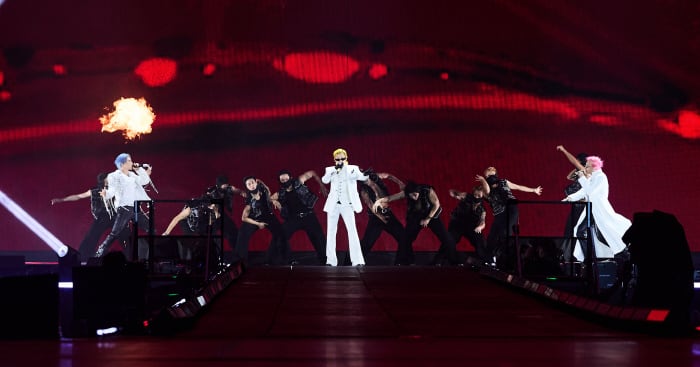
Behind every explosive, stadium-shaking opening chord lies a meticulous machinery of choreography, vocal conditioning, and psychological preparation that the audience rarely gets to see.
When the opening notes of ‘Fantastic Baby’ ripped through the air at BIGBANG’s recent concert—marking a staggering nine-year hiatus from this specific live configuration—the immediate reaction from the crowd was visceral, thunderous, and emotional. However, to view this moment simply as a long-awaited homecoming is to ignore the industrial-grade precision that went into orchestrating such a comeback. Bringing a group of this magnitude back to the live stage after nearly a decade isn’t just about showing up; it is a logistical marathon of vocal rehabilitation, stage stamina rebuilding, and the subtle, high-stakes navigation of their shared creative identity. The intensity displayed at the start of the show suggests that the members didn’t just walk out onto the stage; they stepped back into a role that required months of specialized preparation to match the legendary energy the public demands.
The Invisible Architecture of Re-entry
Unlike a standard tour where artists move from one album cycle to the next, BIGBANG’s return is defined by a massive temporal gap. For the production team and the artists, the primary challenge wasn’t just physical fitness, but rhythmic recalibration. After nine years, the body’s muscle memory for high-octane stadium performances requires a total reboot. Behind the scenes, the group engaged in a rigorous ‘pre-production’ phase that involved months of private rehearsals to ensure that their vocal delivery—which has naturally evolved as they have aged—could still capture the raw, gritty, and charismatic essence of their younger years. This was not merely a case of dusting off old tracks; it was a complex process of reimagining how these iconic soundscapes could function within a 2024 performance paradigm without losing their core identity.
Stamina as a Strategy
The decision to open with a high-intensity track like ‘Fantastic Baby’ was a deliberate tactical move, functioning as an auditory adrenaline shot. In the world of concert production, the setlist opener is the most heavily scrutinized element. By choosing one of their most demanding songs, the group effectively signaled to the industry and the fans that their endurance levels have been intentionally restored to peak capacity. This ‘back-to-basics’ approach serves as a masterclass in stage presence; it forces the audience to stop questioning the long absence and start participating in the immediate, high-stakes spectacle. It is a calculated display of strength designed to silence any lingering doubts about their capacity to command large-scale venues after such a long time away from the spotlight.
Reclaiming the Narrative Through Movement
Beyond the vocal performance, the choreography of their return speaks volumes about the behind-the-scenes chemistry. Navigating a stage after years of solo trajectories requires a unique kind of non-verbal communication. Fans watching the performance might have focused on the nostalgia, but the real story was the seamless synchronization that clearly required a ‘re-learning’ of each other’s spatial habits. The group utilized specialized movement coaches to map out their interaction patterns, ensuring that even after a nine-year separation, their presence on stage felt unified rather than fragmented. This is the hallmark of a professional act that treats their legacy as a project to be managed with absolute care, rather than a gift to be handed out casually.
The Psychological Weight of ‘The Last’
The nuance of their fan interactions, specifically the sentiment surrounding their ‘last’ moments together on stage, suggests an undercurrent of profound reflection. There is a palpable tension between the desire to celebrate the present and the acknowledgment that this chapter is fundamentally different from their beginnings. This awareness forces them to approach every performance with a level of intentionality that simply wasn’t possible in their early twenties. Every smile, every wave, and every ad-lib is filtered through a decade of personal growth and professional transformation. They aren’t just performing songs; they are curating a retrospective experience that balances the demands of an international fanbase with the maturity of artists who have lived through the most significant eras of K-Pop history.
Beyond the Hype: A Blueprint for Resilience
Ultimately, the buzz surrounding their comeback isn’t just about the music—it’s about the sustainability of an icon. The way BIGBANG has managed their return offers a fascinating case study for the entire industry on how to handle legacy acts. By focusing on the ‘why’ and the ‘how’ of their return rather than just the ‘when,’ they have managed to maintain a level of reverence that is difficult to achieve in the fast-paced, disposable era of modern social media trends. As the tour progresses, it will be the subtle details—the endurance during the encore, the evolution of the arrangements, and the unspoken dynamic between the members—that continue to set them apart as the architects of their own, highly enduring, career trajectory.
Source Article: Read the original Korean news here
#BIGBANG #KPOP #KingsOfKPOP #YGEntertainment #FantasticBaby #KPOPNews #MusicIndustry #ConcertProduction #GDragon #Taeyang