As cities around the world light up with massive LED displays, drone shows, and custom transit activations, the global fandom is once again proving that celebrating a BTS member’s birthday has evolved into a massive international cultural event.
Ahead of BTS member Jungkook’s upcoming birthday, global fan communities have launched an unprecedented wave of worldwide support, turning major metropolitan centers and iconic landmarks into breathtaking tributes. From bustling downtown districts in Asia and North America to stunning aerial displays in Japan, fanbases have mobilized across borders to ensure that Jungkook’s name and face light up the global stage. This massive grassroots movement showcases not only the immense devotion of his fanbase, but also the sheer logistical scale of modern K-pop fandom culture, where supporters function with the precision, coordination, and creative ambition of major global marketing agencies.
How Are Global Fanbases Coordinating This Worldwide Birthday Takeover?
The sheer scale of Jungkook’s birthday support relies on highly organized, multinational fan collectives that divide and conquer across continents. For instance, the major Chinese fan club ‘Jungkook China’ has orchestrated a sweeping campaign spanning multiple countries. On September 1st, they are slated to broadcast birthday congratulatory ads across giant LED screens in 11 major Chinese cities, including Shanghai, Shenzhen, Chengdu, Changsha, Guangzhou, Nanjing, Wuhan, Tianjin, Taiyuan, Haikou, and Harbin. Simultaneously, their efforts extend to the United States, where they secured bus stops near the SoFi Stadium in Los Angeles and three ultra-large outdoor billboards from August 17 to September 13. Furthermore, they scheduled a massive project at the heart of New York City, buying space on the Manhattan TSX Live Billboard to screen Jungkook’s birthday video 576 times in a single day. Other regional groups like ‘Jungkook CIS’ are deploying massive LED trucks to circle the SoFi Stadium area for eight hours on his birthday, ensuring that concertgoers and local residents alike are immersed in the celebratory atmosphere.
Beyond North America and China, fan initiatives are popping up in surprising and culturally diverse corners of the globe. In Japan, ‘Jungkook Japan’ elevated the celebrations into high art by orchestrating a breathtaking drone show on August 30th, launching roughly 1,000 drones into the Tokyo sky for a ten-minute aerial spectacle, followed by a dedicated fireworks display on September 1st. In Southeast Asia, Indonesian fans secured advertising space on the rooftop of Jakarta’s tallest building, the Graha Mandiri, alongside major LED placements at the Blok M BCA subway station. European and Central Asian fans have joined the choir as well: ‘Jungkook Hungary’ placed birthday ads on two outdoor screens at the Allee shopping mall in Budapest, Russian fans utilized a prominent billboard in Bryansk, and Kazakh fans claimed the largest LED screen, KTZ, in their capital city of Astana. Meanwhile, Indian fans selected a public park in Kolkata, placing visual tributes in Allen Park so that local communities could share in the festivities. This multi-layered geographical spread illustrates how K-pop fandoms have mastered localized, high-impact public relations campaigns on a truly planetary scale.
Why Do Fans Invest So Heavily in Physical Landmark Projects?
From an analytical standpoint, the reliance on high-visibility physical infrastructure—such as skyscrapers, iconic transit hubs, and Times Square billboards—reflects a deep-seated desire to bridge the digital divide inherent in global fandoms. While streaming records, hashtag trends, and digital voting dominate daily online metrics, physical landmarks offer a tangible, undeniable footprint in the real world. When a fan organization projects a massive video onto the TSX Live Billboard in Times Square or flies 1,000 drones over Tokyo, they are transforming abstract digital fandom into undeniable physical reality. This phenomenon mirrors a broader pattern seen throughout K-pop’s history, where passionate communities seek to materialize their collective affection into spaces traditionally reserved for corporate advertising and mainstream media giants. It signals an industry direction where fans actively co-author the public visibility of their idols, effectively claiming public squares and urban skylines as spaces of cultural celebration.
This type of high-stakes fan support also serves a powerful communal function within the fandom itself. Organizing a multi-city, cross-continental birthday project requires intense collaboration, fundraising transparency, and localized project management among diverse fan factions. When individuals contribute to these monumental efforts, they are reinforcing their bonds with a global community of peers who share a singular passion. The resulting public displays act as living proof of the fandom’s collective power, fostering a profound sense of shared ownership and pride. While external observers might marvel at the sheer financial and logistical coordination required to rent prime advertising space across New York, Tokyo, Budapest, and Jakarta simultaneously, for the fans, it is a deeply personal expression of gratitude and unwavering support for an artist whose music has touched their lives across geographical boundaries.
What Does This Signal for the Future of Fandom Culture and Artist Promotion?
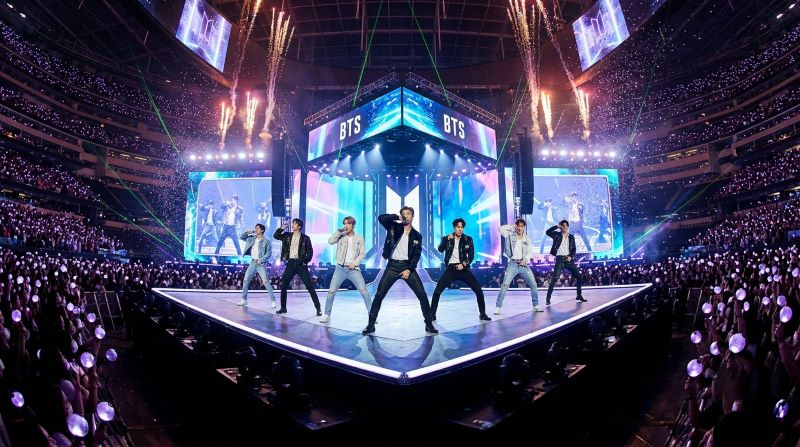
Looking ahead, the escalating scale of artist birthday projects points toward an increasingly sophisticated, decentralized future for global entertainment marketing. As K-pop groups like BTS continue to break records with massive world tours—such as their historic ‘Arirang’ tour generating historic revenues and dominating global charts—the symbiotic relationship between artist milestones and fan-driven activations will only deepen. The ability of grassroots organizations to execute multi-market out-of-home advertising campaigns rivals the promotional budgets of traditional entertainment conglomerates. This suggests that the future of artist promotion will rely even more heavily on co-created, user-generated public events that blur the line between official corporate marketing and authentic fan devotion. As these birthday campaigns continue to grow in ambition and geographic reach, they cement Jungkook’s status not merely as a pop icon, but as a unifying cultural force capable of transforming the physical landscape of major global cities into a canvas of international celebration.