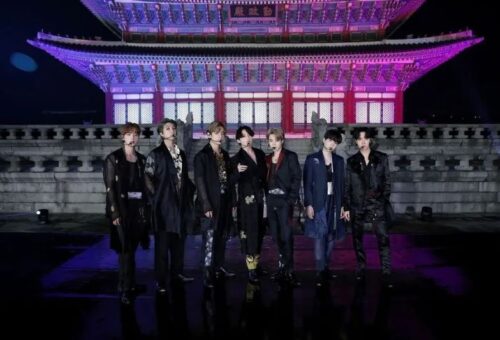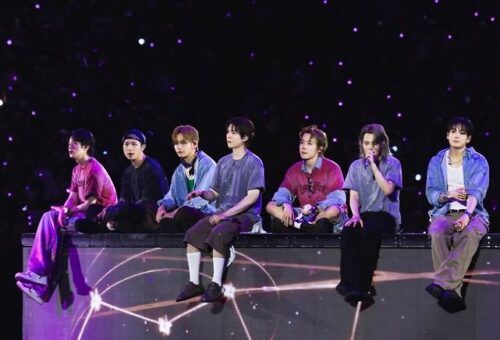

Even top-tier acting royalty like Cho Jung-seok cannot escape the gravitational pull of BTS, proving that the group’s cultural reach extends far beyond the traditional boundaries of the K-pop industry.
Recently, acclaimed South Korean actor Cho Jung-seok offered fans a rare, unfiltered look at his meticulous preparation process through his personal YouTube channel. While documenting the intense physical training and lifestyle adjustments required ahead of his upcoming role in the Netflix original series ‘Paperman’, the actor engaged in a lighthearted conversation with fellow actor and guest Jung Sang-hoon. Amidst sharing behind-the-scenes glimpses of their enduring friendship and mutual respect, the two veterans participated in a playful balance game that inadvertently highlighted the absolute, unmatched cultural dominance of BTS in the modern entertainment landscape.
To truly understand the weight of this casual YouTube segment, one must examine the rigorous behind-the-scenes realities of how contemporary South Korean celebrities manage their public images and digital content strategies. Preparing for a major production like ‘Paperman’ is no small feat; it demands a grueling regimen of physical conditioning, dietary discipline, and psychological focus. In the vlog, Cho Jung-seok revealed the lesser-known context of his preparation, enlisting Jung Sang-hoon as a running coach to whip himself into shape before cameras start rolling. This dedication to craft underscores a broader industry shift: actors and entertainers are increasingly expected to maintain an active, authentic digital presence through personal vlogs while simultaneously balancing punishing production schedules. The intersection of traditional acting and digital content creation requires a delicate balancing act, where personal channels serve as a bridge between polished on-screen personas and raw, everyday relatability.
It was within this context of digital content creation that the conversation took a humorous yet telling turn regarding industry metrics and star power. When faced with a classic hypothetical dilemma—choosing between a full year of fixed guest appearances on each other’s respective YouTube channels or a mere one-minute cameo appearance by BTS as a complete group—both Cho Jung-seok and Jung Sang-hoon bypassed the guaranteed long-term content collaboration in favor of the fleeting, golden opportunity of a group appearance by BTS. The moment carried an extra layer of self-aware irony given that Cho Jung-seok had previously appeared on Jung Sang-hoon’s digital show, generating the channel’s highest viewership numbers to date. Yet, even with proven collaborative chemistry and tangible metrics on the table, the mathematical and cultural allure of BTS proved irresistible. As Jung Sang-hoon aptly summarized with a laugh, human nature leans toward the extraordinary, and Cho Jung-seok readily agreed that against the unmatched phenomenon of BTS, ordinary content rules simply do not apply.
This candid exchange serves as a fascinating mirror for broader trends within the global entertainment ecosystem, reflecting how cross-industry figures view the pinnacle of contemporary pop culture. In the modern era, K-pop acts—and BTS in particular—have transcended traditional musical boundaries to become the ultimate benchmark of cultural relevance and audience engagement. When mainstream dramatic actors who command massive box office hits and critically acclaimed television ratings openly acknowledge that a single minute of a group’s presence outweighs an entire year of collaborative digital partnership, it illustrates a profound shift in media hierarchy. It suggests that collective global impact has redefined what constitutes ultimate value in media appearances, transcending even established professional loyalties and personal friendships within the Korean entertainment industry.
For global fans and digital communities, moments like this validate the pervasive, inescapable influence of their favorite artists in everyday pop culture discourse. Fandoms typically react to such unscripted mentions with a mixture of amusement and validation, viewing them as organic proof of the group’s legendary status rather than manufactured promotional beats. When respected industry peers treat the mere hypothetical possibility of a BTS appearance with genuine awe and competitive desire, it reinforces the collective narrative of the group’s untouchable cultural standing. It bridges the gap between high-end cinematic production and mainstream idol culture, showing that the admiration runs deep across all sectors of the South Korean entertainment sphere.
Looking ahead, as actors continue to embrace personal digital platforms like YouTube to connect directly with audiences, we can expect more of these unfiltered, behind-the-scenes revelations that blur the lines between different branches of the entertainment world. The growing synergy between dramatic storytelling and digital creator culture means that K-pop’s heavyweight cultural touchstones will frequently pop up in unexpected conversations, acting as universal cultural currency. Whether Cho Jung-seok ultimately secures that coveted one-minute collaboration or simply continues his intense preparation for ‘Paperman’, this lighthearted debate remains a telling snapshot of an industry where, when it comes to BTS, the rules of ordinary media calculus simply cease to apply.