As the Recording Academy unveils its new ‘Best Asian Pop Music Performance’ category for the 69th Grammy Awards, a striking silence has emerged from the powerhouses of Seoul, revealing a deep-seated apprehension regarding the segregation of K-pop on the global stage.
The announcement of the 69th Grammy Awards lineup brought with it the introduction of five new categories, most notably the ‘Best Asian Pop Music Performance’. Yet, as the curtain lifted on the submission process, the industry witnessed a curious absence: not a single artist from the ‘Big Four’ labels—HYBE, SM Entertainment, JYP Entertainment, and YG Entertainment—submitted their work to this new category. With only 116 submissions in total, a figure that pales in comparison to the 519 entries for the simultaneously launched ‘Best Latin Song’ category, it is evident that the reception of this new award is lukewarm at best, and actively avoided by the industry’s most influential players.
A Strategic Boycott or a Calculated Silence?
The decision-making process behind these submissions is rarely a solo endeavor. As outlined by the Recording Academy, the eligibility window for the 69th awards ran from late August 2025 through August 2026, with a rigid submission period closing in late summer. This window represents a period of intense internal deliberation for agencies like JYP and HYBE. While the official stance remains largely unstated by the labels themselves, the broader industry context provides a clear roadmap. When BTS famously declared their intention to abstain from the awards entirely—a move that resonated far beyond the individual group—it set a precedent for how top-tier management perceives the Academy’s structural shifts.
This is not merely about a lack of content; it is a manifestation of a long-standing tension between the global recognition K-pop craves and the ‘ghettoization’ that artists fear. By creating a specific lane for ‘Asian Pop’, critics argue that the Recording Academy is effectively placing a glass ceiling on these artists. If a song is categorized as ‘Asian Pop’, does it inherently disqualify it from being recognized as the best ‘Pop’ song of the year on a global scale? This question lies at the heart of the decision made by the major labels to pivot away from this category, choosing instead to focus on broader, more competitive fields if they choose to participate at all.
The Language Barrier and the ‘Meaningful Portion’ Dilemma
One of the most complex hurdles introduced by the Academy is the linguistic requirement for the new category. Songs must contain a ‘meaningful portion’ of an Asian language, effectively banning tracks that are entirely in English. This mirrors the criteria for the new ‘Best Latin Song’ category, which requires a 51% threshold of Spanish. However, the lack of a specific numerical percentage for ‘Asian Pop’ leaves the classification vulnerable to subjective interpretation by the voting body. This ambiguity creates a production nightmare for agencies: should they curate their discography to fit a specific language ratio, or prioritize global marketability by sticking to English? The case of BTS’s English track ‘Swim’, which would have been eligible for general categories but ineligible for the Asian Pop category due to its language, highlights the contradictory nature of these new rules.
The industry’s reaction suggests that this is not just about logistics; it is about identity. K-pop has spent the better part of a decade fighting to be treated as a mainstream musical force, not a novelty sub-genre. For major labels, submitting to a category that explicitly highlights geography and language feels like a step backward, reinforcing the narrative that K-pop belongs in a separate, subordinate tier. The decision to skip the category, therefore, acts as a subtle but powerful form of protest against the framing of their art.
The Sentiment of the Fandom and the Future of Industry Standards
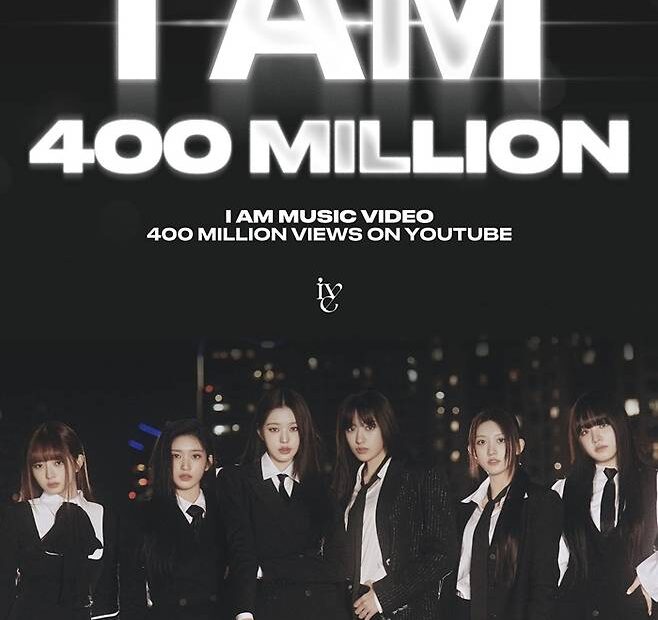
Fan communities have watched these developments with mixed emotions. While there is a natural desire to see their favorite artists hold a Grammy, there is an equally strong consensus among the international fandom that K-pop should be judged on its sonic merit, not its origin. The ‘General Field’—the Album, Record, and Song of the Year categories—remains the true north for fans. When artists like IVE, FIFTY FIFTY, and Park Hyo Shin submit to the new category, it sparks a debate: is it a valid path to recognition, or a compromise that limits their artistic reach? The general fan sentiment suggests that the prestige of a Grammy is currently being outweighed by the feeling of being categorized as ‘other’.
Moving forward, the 69th Grammy Awards will serve as a definitive litmus test for the relationship between the Korean music industry and the American Recording Academy. If the ‘Best Asian Pop Music Performance’ category struggles to gain traction in the coming years, the Academy will be forced to re-evaluate whether these specific partitions actually serve the global music community or merely reflect an outdated, regionalized view of pop music. For the Big Four labels, the focus remains clear: their goal is not to win the ‘best Asian’ award, but to compete for the title of ‘best in the world’. Whether the Grammys are ready to accommodate that ambition without forcing artists into segmented silos remains the most critical, yet unanswered, question of the season.