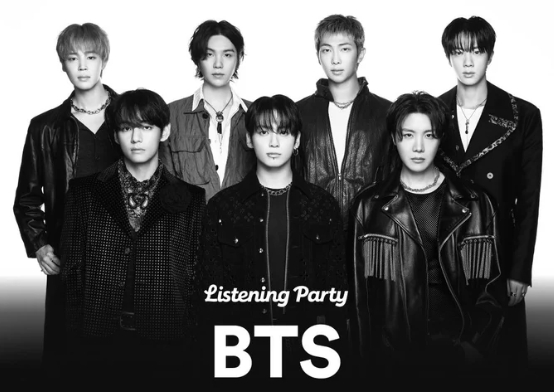
In a significant escalation against the predatory practices plaguing the live music industry, South Korean authorities have officially declared war on large-scale ticket scalping. Following the recent arrest of a serial scalper who utilized automated macro software to hoard nearly 9,000 concert tickets, President Yoon Suk-yeol has issued a stern warning: the government will not only track these criminals to the ends of the earth but will also move to confiscate all illicit profits derived from these schemes. This move marks a pivotal shift in how the entertainment sector and the state interact to protect the sanctity of the fan-artist connection.
The crackdown arrives as a direct result of the amended Performance Act, which took effect in late August. By leveraging this updated legislation, police successfully dismantled an operation that saw a single individual generate over 2.4 billion KRW (approximately 1.8 million USD) by inflating ticket prices up to 30 times their original value. For global K-pop fans who have long felt priced out of the concert experience by ‘bot-farms’ and organized resellers, this government-led intervention represents a long-awaited recognition of the economic and emotional harm caused by secondary market manipulation.
The Anatomy of the Crackdown: What You Need to Know
To understand the depth of this issue, one must look at the mechanics behind the headlines. Fans often ask: why is this happening now, and what does it actually change for the average concert-goer? The following points delineate the reality of the situation:
- The Scope: Authorities captured an individual who, over a span of seven years, acquired 8,967 tickets using macro programs and stolen identities.
- Financial Impact: The suspect successfully laundered these tickets into 2.4 billion KRW in revenue, which was used to purchase real estate assets like apartments and commercial spaces.
- Legal Evolution: The amended Performance Act now provides a specific legal framework to criminalize the use of ‘macro’ software in ticket procurement, moving beyond simple ‘obstruction of business’ charges.
- Extraterritorial Intent: The President’s statement emphasized that digital anonymity offers no shield, declaring that even international perpetrators will be pursued for crimes against Korean ticket holders.
For those watching the industry, this is not merely a legal update; it is a cultural recalibration. The practice of scalping has long been viewed as an inevitable, if unpleasant, side effect of global demand. However, by positioning this as a matter of national priority, the government is signaling that the K-pop industry is a critical national asset that requires protection from market distortion.
Question 1: Why is the government getting involved in concert ticketing?
Historically, ticket scalping was treated as a minor nuisance or a civil matter. The shift toward state intervention suggests that the government recognizes the ‘secondary market’ as a parasite on the cultural economy. When fans are prevented from attending a concert because of artificially inflated prices, the ecosystem of the K-pop industry—which relies on fan participation and loyalty—is damaged. By labeling these actions as ‘crimes against the public’ rather than simple business disputes, the state is effectively elevating the importance of equitable access to entertainment.
Question 2: Does the new Performance Act actually stop scalpers?
The amendment of the Performance Act is the ‘teeth’ this issue was previously missing. By specifically outlawing the use of macros, law enforcement now has a clear path for prosecution that does not rely on outdated ‘obstruction of business’ statutes, which were often difficult to prove in court. While no law can completely eradicate human greed, the current trajectory—which includes the seizure of assets purchased with illicit funds—creates a genuine financial risk for those who previously viewed scalping as a ‘victimless’ high-profit side hustle.
Question 3: How does this impact international fans?
International fans have often borne the brunt of scalping, as they frequently purchase tickets on the secondary market out of necessity due to language barriers or lack of access to local primary platforms. The government’s promise to pursue offenders regardless of location is a major development. It suggests that if an international reseller is targeting Korean platforms, they are now officially in the crosshairs of Korean law enforcement. This sends a message of solidarity to the global fanbase, affirming that their participation in the culture is being protected by the authorities.
Question 4: Is this the end of ‘bot-driven’ ticket shortages?
While the arrest is a massive success, it is likely just the beginning. The nature of the internet is inherently global, and scalpers often adapt by moving their infrastructure across borders. However, the precedent being set is one of ‘Asset Recovery.’ The fact that the government is targeting the funds—and by extension, the real estate and luxuries bought with that money—is the most effective deterrent possible. It changes the cost-benefit analysis for any potential perpetrator. This is no longer just about paying a fine; it is about losing the very profits that motivated the crime in the first place.
Industry experts suggest that this mirrors patterns seen in other sectors, such as the crackdown on illegal streaming or copyright infringement. When a government realizes that a multi-billion dollar industry is being hollowed out by bad actors, the response is almost always systemic. This isn’t just a win for BTS or other massive groups; it is a structural change for the entire K-pop economy. Fans can expect to see more rigorous identity verification processes and perhaps more collaborative efforts between ticketing platforms and the state to ensure that human fans, not software, are the primary purchasers at checkout.
Ultimately, the fervor with which this news is being received reflects the deep-seated frustration of a fanbase that has felt ignored for too long. For the everyday K-pop supporter, this is more than just about lower prices; it is about the right to participate in a culture they have helped build. As we look ahead, the success of this crackdown will likely serve as a blueprint for other nations struggling with the same issue. By demonstrating that illegal ticket profiteering carries severe, long-term consequences, South Korea is setting a new standard for the global entertainment industry, proving that when the fans win, the integrity of the art itself is preserved.