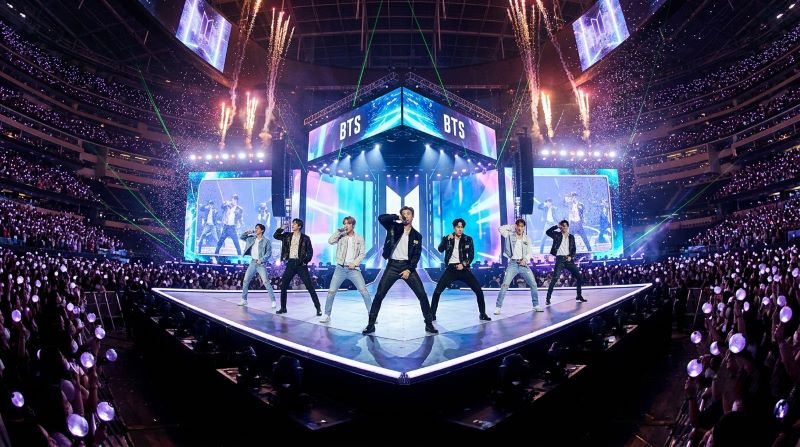
In a significant move that highlights the growing intersection of K-pop, digital economy, and national legislation, the South Korean government has taken a hardline stance against concert scalping. President Yoon Suk-yeol recently utilized social media to address the arrest of scalpers who exploited the high demand for major events, specifically citing cases where tickets for BTS concerts were being resold at exorbitant markups of up to 30 times their original value. This enforcement action, which resulted in the seizure of over 2.4 billion won in illegally obtained profits, marks a turning point in how the industry handles the shadow economy surrounding blockbuster performances.
The Economics of Exclusivity and Digital Scarcity
To understand the gravity of this situation, one must look at the sheer scale of the numbers involved. When tickets priced at a standard rate are resold for millions of won—with some individual tickets climbing as high as 3 million won—the damage goes beyond mere financial loss for the fan. It fundamentally alters the accessibility of cultural experiences. In the K-pop industry, where a concert is not just a show but a high-stakes, communal event that defines a fan’s connection to an artist, the presence of predatory scalpers creates a hostile market. These entities utilize automated software to bypass security measures, effectively ‘hoarding’ supply to force price inflation. The case cited by the administration, which involved the purchase of residential property using illicit scalping proceeds, highlights the massive, organized nature of these criminal operations.
As the government steps up its surveillance, the message is clear: the era of predatory ticket scalping in K-pop is being met with a coordinated, cross-agency enforcement strategy aimed at protecting the integrity of the fan experience.
Tracing the Industry Trajectory and Legislative Response
This crackdown coincides with a broader shift in how South Korea regulates the performance industry. The implementation of the revised Performance Act, which took effect on August 28, serves as the legal foundation for these actions. Historically, the K-pop industry operated in a somewhat loose regulatory environment regarding secondary markets. However, as groups like BTS reached unprecedented global influence, the ticket demand far outstripped the physical capacity of venues, creating a vacuum that criminal syndicates were quick to fill. By framing these actions as a matter of consumer protection and market fairness, the government is signaling that the ‘Hallyu’ wave is a major economic asset that must be shielded from predatory practices that undermine public trust.
The Data-Driven Battle Against Illicit Gains
The statistics provided by the government serve as a metric for the severity of the problem. When we analyze the volume of ‘2.4 billion won’ in illicit gains, we see the cumulative impact of thousands of individual fans being priced out of events. For global fans, these numbers are a sobering reminder of why ticketing processes have become increasingly rigorous, involving complex identity verification, lotteries, and tiered ticketing systems. The crackdown is not merely about punishing individuals; it is about reclaiming the digital marketplace. When scalpers manipulate inventory, they disrupt the data analytics that agencies use to understand true fan demand. By removing these ‘ghost buyers’ from the equation, the industry aims to ensure that concert revenue reflects legitimate attendance rather than artificial supply shortages.
Community Sentiment and the Value of ‘Fair Access’
Within the global K-pop fandom, the reaction to these developments is largely one of relief. For years, the ‘fan vs. bot’ struggle has been a source of immense stress, with legitimate fans frequently finding themselves shut out of shows despite being ready and waiting at the moment of release. The consensus across social media forums is that ticket prices, while high, are meant to go toward the artists, production, and the elaborate infrastructure required for a BTS-level performance—not into the pockets of anonymous exploiters. There is a strong feeling that the ‘social contract’ between the artist and the audience is violated when a concert becomes an investment vehicle for scalpers rather than a cultural experience for the dedicated base.
The Future of Ticketing and Legislative Precedent
Looking ahead, this shift suggests a more proactive approach to ‘digital fairness.’ We should expect to see continued investments in tracking software that identifies and blocks automated purchase patterns before they can clear a checkout screen. Furthermore, the precedent set by the seizure of profits suggests that the government is prepared to make scalping a high-risk, low-reward endeavor. If the threat of asset forfeiture becomes a standard consequence for large-scale scalping, it may deter the syndicates that currently view K-pop concerts as ‘easy money.’ The industry will likely continue to evolve toward more robust identity-linked ticketing, perhaps moving toward non-transferable digital passes that tie ownership to a verified fan identity. As K-pop continues its expansion, these infrastructure developments will be as critical to its success as the music itself, ensuring that the spectacle remains an inclusive space for those who truly love the craft.