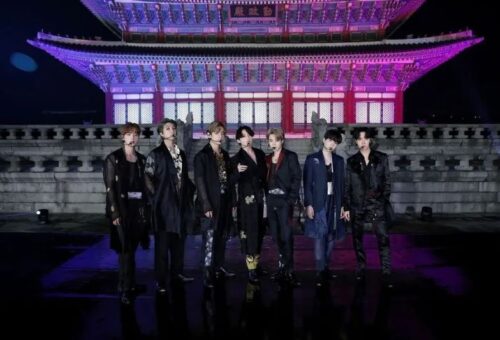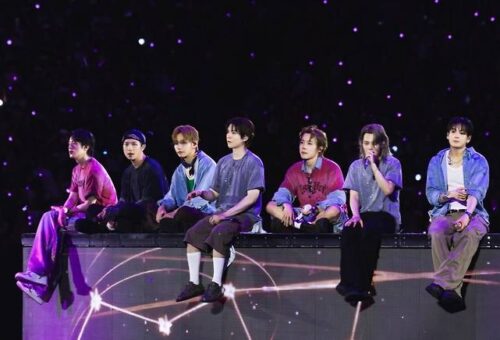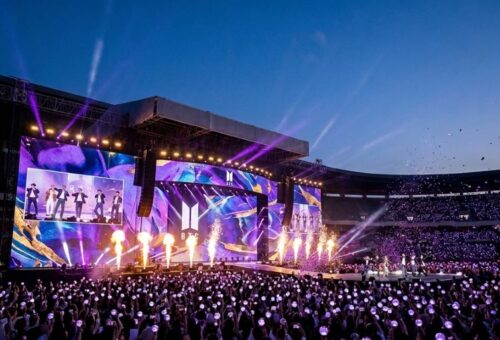
From record-breaking chart dominance to city-wide economic surges, BTS is redefining the scale of global touring with their ‘Arirang’ world tour, turning each performance into a macro-economic event.
The BTS ‘Arirang’ world tour is currently moving through its latter half, with 88 scheduled dates that have become a focal point for global economic analysts and music industry observers alike. As of October 26, the group has successfully completed 57 shows, maintaining a dominant presence on the industry-standard Pollstar ‘Global Concert Pulse’ chart, where they have held the number one spot for seven consecutive weeks. This is not merely a string of successful performances; it is a meticulously crafted logistical and cultural enterprise that is influencing tourism, local commerce, and international city branding on a scale rarely seen in contemporary entertainment.
The Architecture of an Economic Phenomenon
To understand the weight of this tour, one must look at the hard data behind the fan experience. In Bogota, Colombia, the October 2-3 performances drew over 100,000 attendees. According to reports from the local tourism observatory, these two days generated an estimated 99.9 billion Colombian pesos, roughly equivalent to 40.6 billion Korean won. The impact rippled through sectors including hospitality, retail, and transportation, with flight bookings to the city surging by 46.6 percent compared to the same period the previous year. What stands out here is not just the volume of the crowd, but the demographic composition: approximately 43 percent of these attendees were travelers from outside the immediate region, effectively transforming the concert into a massive boost for the local tourism economy.
Similarly, the numbers in South America highlight a level of demand that defies standard touring logic. In Sao Paulo, Brazil, the pre-sale phase attracted 630,000 applicants, while Lima, Peru, saw a waiting list of 520,000 people. The Peruvian Ministry of Foreign Trade and Tourism (MINCETUR) and the Lima Chamber of Commerce have projected that the influx of over 50,000 fans to the city will yield an economic impact of approximately 18.7 million USD, with some local estimates scaling as high as 200 million Soles. These figures underscore a transition in how K-pop acts are perceived by municipal governments—not just as musical guests, but as significant drivers of GDP and regional visibility.
Strategic Intent and the ‘BTS 2.0’ Evolution
The decision to anchor this tour around the theme of ‘Arirang’ is a calculated artistic and branding evolution. Chairman Bang Si-hyuk of HYBE previously articulated a vision for ‘BTS 2.0’ during a Billboard interview, emphasizing that the group cannot remain anchored in the past. By weaving traditional Korean motifs into a global tour, BTS is effectively positioning themselves as a cultural bridge. Bang described this shift as moving beyond being a group loved solely by a dedicated fanbase, to becoming an ‘artist like a tourist destination’—a landmark that even non-fans feel compelled to witness. This is a profound shift in marketing, moving from niche fandom engagement to mass-market cultural tourism.
This shift is mirrored in the way cities are now interacting with the group. Rather than simply providing a venue, municipalities are formalizing the BTS experience. The declaration of ‘BTS Week’ in Los Angeles, ‘BTS Days’ in Chicago, and the official ‘BTS Weekend’ in El Paso, Texas, demonstrate how effectively the group’s presence can be used to cultivate city identity. When heads of state, such as Mexican President Claudia Sheinbaum, host the group at the presidential palace, it elevates the tour from a standard entertainment itinerary to a formal diplomatic and cultural exchange. This suggests that the ‘Arirang’ tour is as much a project of soft power as it is a commercial venture, successfully merging national heritage with modern performance art.
Global Fandom and the Multiplier Effect
For the global fan community, these events represent a unique fusion of cultural pride and communal belonging. During the performance of the track ‘Body to Body’, which incorporates the refrain of the Korean folk song ‘Arirang’, fans across vastly different linguistic backgrounds are seen singing in unison. This phenomenon highlights a key trend in K-pop’s global expansion: the transition from consuming content in the original language to an active, performative participation in the artist’s native culture. It signifies a maturation of the fandom that is no longer satisfied with just listening but feels a deep, experiential connection to the artistic narrative being told.
The data surrounding ticket demand and local economic impact reveals a persistent trend: BTS fans, or ARMY, have become an organized force capable of boosting local economies to a degree that necessitates government coordination. When 50,000 people gather at Mexico City’s Zocalo square, it is not just a concert; it is a mass demonstration of cultural influence. This level of engagement has become the gold standard for global K-pop tours, where success is no longer measured by ticket sales alone, but by the tangible, measurable impact on the host city’s financial and social landscape.
Looking Ahead: The Legacy of a Landmark Tour
As the ‘Arirang’ tour moves toward its final stages in Asia and Oceania, the industry is left to consider what comes next. The success of this tour sets a precedent for how future large-scale global tours will be structured. By integrating traditional elements with high-frequency engagement strategies, the model used here will likely become a blueprint for other artists looking to maximize their international footprint. We can expect future tours to focus even more heavily on this ‘destination artist’ strategy, where the concert itself is marketed as a total cultural experience.
Furthermore, the upcoming television broadcast of the Tokyo Dome performance on TBS this November indicates a shift toward long-term monetization through exclusive content distribution. By capturing these landmark moments with high-production value for broadcast, HYBE is extending the economic lifespan of each tour date indefinitely. The BTS ‘Arirang’ tour has not only proven that the group remains at the pinnacle of live performance but has also demonstrated that through careful strategic planning, a world tour can effectively act as a self-sustaining engine of tourism and economic growth, setting a new benchmark for global pop stardom that will be studied for years to come.