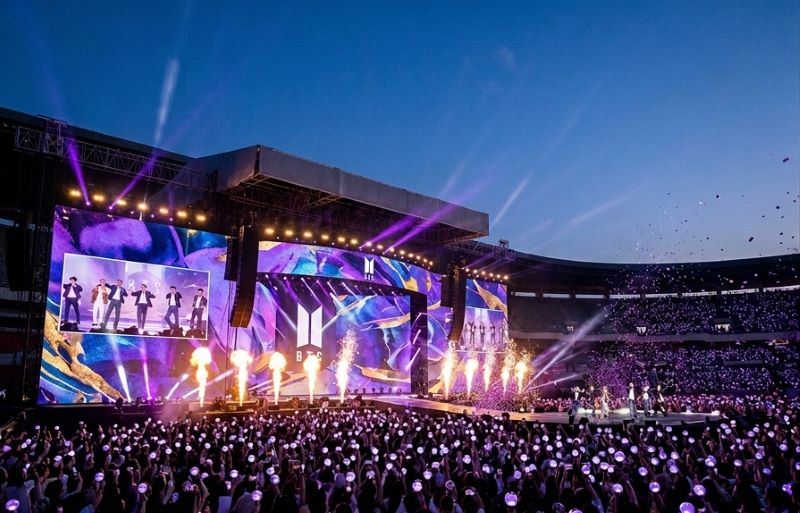
The intersection of global fandom activism and traditional media gatekeeping has sparked a volatile confrontation, underscoring the growing pains of a borderless music industry.
The recent friction between the massive BTS global fandom, known as ARMY, and the American radio program ‘The Woody Show’ serves as a microcosm for the complex, often fraught relationship between K-pop artists and traditional Western media. Following BTS’s performance at the 2026 iHeartRadio Music Festival in Las Vegas, a segment of the fanbase expressed significant dissatisfaction regarding the group’s allotted stage time, perceived technical issues, and the overall production quality. In a swift and aggressive pivot, the hosts of the radio program—distributed by iHeartMedia—responded to these critiques with vitriolic language, labeling fans as ‘losers’ and dismissing their concerns as groundless conspiracy theories. This incident, while appearing localized to a radio talk show, highlights a widening gap in expectations between an internet-native global fandom and the rigid infrastructure of terrestrial broadcasting.
The Evolution of a Global Powerhouse
To understand the intensity of this reaction, one must look at the arc of BTS’s career trajectory. Throughout their ascent, which began with modest origins in 2013 and culminated in global superstardom, the group has consistently relied on the symbiotic relationship with their fans to dismantle traditional entry barriers in the music industry. In their early years, ARMY functioned as a decentralized marketing force, bridging the gap left by a lack of traditional domestic radio play. As the group moved into the stadium-touring era and secured multiple Billboard successes, that dynamic shifted from a grassroots movement to an institutional pillar of the music industry. Consequently, the fandom has developed a heightened sense of vigilance; they view any instance of suboptimal treatment or perceived exploitation of the group as a challenge to the hard-won stature BTS has earned over the last thirteen years.
In the context of the 2026 iHeartRadio Music Festival, the fans’ grievances were not merely about ‘length’ in a vacuum; they were a reaction to the perceived standard of care owed to artists of BTS’s caliber. When fans scrutinized the fifteen-minute set and reported technical difficulties, they were analyzing the performance through the lens of a decade-long expectation of excellence. This history has conditioned the fandom to expect parity with other headline acts. When that parity is not met, the institutional response from traditional media—such as the comments made on ‘The Woody Show’—often serves to highlight a cultural mismatch. The show’s hosts attempted to defend the production by citing industry standards and contractual set lengths, effectively treating the fans’ input as an irrational noise rather than a valid critique of a consumer experience.
The Clash of Digital and Traditional Media
The escalation of this situation, where radio hosts openly taunted the fandom, signals a profound shift in how media entities interact with global pop culture. In previous decades, a dismissive comment from a local radio host might have gone unnoticed. In the modern era, the digital footprint of a fandom means that such comments are immediately amplified, scrutinized, and met with a collective response. The hosts’ decision to characterize the fandom’s collective pushback as a ‘loser’ mentality is a defensive mechanism that reflects a traditional media bias: the belief that they still hold the monopoly on ‘legitimate’ industry critique. By framing the fan reaction as a conspiracy theory, the radio hosts attempted to delegitimize the power dynamic that has fueled BTS’s rise—a power dynamic that relies on the very digital engagement they were mocking.
This confrontation mirrors other moments in recent K-pop history where the ‘old guard’ of music distribution has struggled to adapt to the decentralized, high-volume engagement of K-pop fandoms. It is rarely a battle over facts, but rather a clash of cultures. While the radio hosts relied on their knowledge of contractual agreements and logistical constraints to justify the festival setlist, the fans were operating on a model of brand management. To the fandom, BTS is a premium entity that should command premium treatment at all times; to the broadcast media entity, the festival is a logistical event bound by strict timing and broadcast requirements. This fundamental disagreement is exacerbated by the fact that the two sides are speaking entirely different languages regarding what constitutes ‘respect’ in the music business.
Charting the Future of Fan-Media Relations
Looking ahead, this incident poses a significant question about the sustainability of current industry practices. As K-pop artists continue to integrate into the Western festival circuit, the demand for equitable treatment will only intensify. The ’15-minute set’ controversy is a harbinger of potential future friction if organizers do not proactively manage expectations with the same level of care they apply to their technical production. Furthermore, the reliance on ad-hominem attacks by media personalities suggests that many traditional platforms are still ill-equipped to handle the level of scrutiny that comes with covering global icons. Rather than dismissing fans, future media interactions will likely need to adopt more transparent communication styles to avoid the kind of backlash that turns a minor scheduling issue into a PR crisis.
The career of BTS has been defined by their ability to transcend obstacles, and this current chapter is no different. As they continue to navigate a landscape where they are both industry giants and outsiders in specific domestic media spheres, the role of the fanbase will remain a subject of debate. Whether this event leads to more rigorous professional standards at large-scale festivals or remains a cautionary tale about the toxicity of modern media gatekeeping, one thing is clear: the era where fan feedback can be simply dismissed is effectively over. The industry is currently witnessing a transition where the power to define the narrative of a performance is no longer exclusively held by those behind the microphone on the radio, but by those who carry the artist to the stage in the first place. The coming years will likely be defined by whether these two groups can find a way to coexist or if this friction will become the new baseline for global music tours.