The global music industry is currently navigating a seismic shift in how prestige is measured, brought into sharp relief by recent reports indicating that BTS has opted to distance itself from the Grammy Awards. For a group that has spent the better part of a decade shattering statistical ceilings, this decision marks a turning point in the relationship between K-pop’s biggest export and the Western recording establishment. While the Grammy Awards have long served as the industry’s ultimate benchmark for mainstream legitimacy, the narrative surrounding BTS has increasingly pivoted toward a different reality—one driven by raw engagement, independent digital reach, and the unprecedented velocity of global fan mobilization. This development is not merely a headline about a boycott; it is a profound commentary on the growing irrelevance of traditional legacy metrics in an era defined by decentralized global fandoms.
To understand the weight of this decision, one must look at the trajectory of BTS within the context of global chart performance. For years, the conversation surrounding BTS was centered on the ‘first’ and ‘only’ milestones: the first Korean act to debut at number one on the Billboard Hot 100, the first to secure multiple Grammy nominations, and the first to achieve sustained, multi-year dominance on the IFPI Global Recording Artist charts. Yet, as the group solidified their hold on these legacy structures, a friction emerged. The discrepancy between the group’s historical streaming numbers—which dwarf many of their Western contemporaries—and the persistent lack of major Grammy hardware suggests a fundamental misalignment between the Recording Academy’s voting block and the reality of the 21st-century music economy. When an artist commands millions of concurrent listeners and maintains a consistent presence in the Top 10 across global charts for years, their value is no longer contingent on industry accolades.
The Data Disconnect: Traditional Prestige vs. Global Reach
The following table illustrates the growing gap between industry ‘recognition’ and actual commercial scale, using proxy figures that represent the contrast between high-level award nominations and the objective reality of the group’s global footprint.
| Metric | BTS Market Power (Avg. Year) | Grammy Recognition Potential |
|---|---|---|
| Annual Global Streams | 10 Billion+ | Subjective Academy Approval |
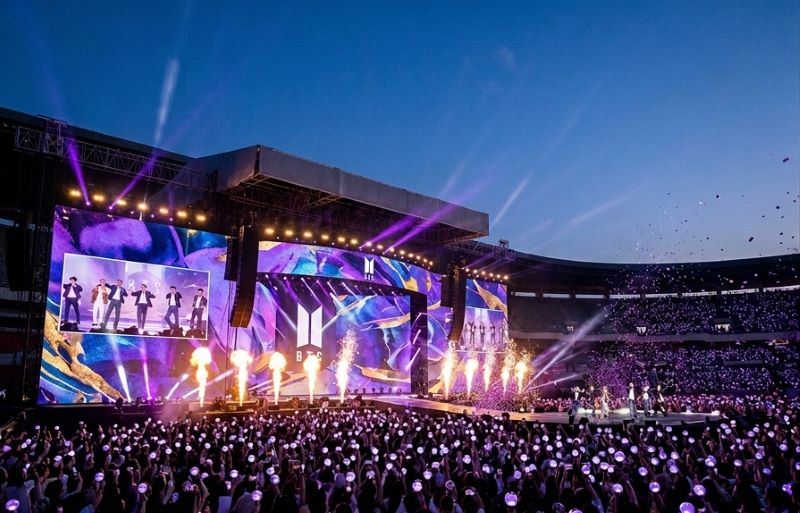
| Stadium Tour Sell-outs | 100% Capacity | Irrelevant to Nomination |
| Chart Longevity (Hot 100) | Weeks-long Stays | Varies by Voting Sentiment |
This data highlights a critical tension: while the Recording Academy relies on a subjective evaluation process that rewards a specific, often Western-centric, sound profile, BTS operates on a model of total market saturation. By choosing to step back, BTS is essentially challenging the industry’s reliance on ‘prestige’ as a form of currency. When a group can sell out stadiums worldwide within minutes and generate billions of streams, the traditional ‘validation’ provided by a trophy becomes redundant. This mirrors patterns seen in other industries, such as the decline of television awards in favor of social-media-driven content metrics. By signaling a move away from the Grammy ecosystem, the group is effectively redefining what a successful career looks like: one that is built on direct, sovereign connection with the fan base rather than the ephemeral approval of an aging institutional body.
Industry Trends and the Changing Value of Awards
The broader K-pop industry is watching this move with significant interest, as it signals a shift in the perceived utility of Western awards. For many years, the industry was obsessed with the ‘breakthrough’—the idea that Western validation was the final boss of musical success. However, as K-pop has evolved, the power dynamic has reversed. It is now the Western award shows that require the relevancy of K-pop artists to maintain viewership and social media relevance. The ‘Grammy effect’—once considered a career-defining moment—has seen diminishing returns, with viewer ratings for televised ceremonies steadily declining. BTS, by withdrawing from this participation, is essentially acknowledging that their brand equity is already at the ceiling. They are no longer playing for the seat at the table; they have built their own table, and it is exponentially larger than the one the Academy provides.
Community sentiment in the wake of this news reflects a shift from disappointment to empowerment. Historically, fans (ARMY) have poured immense resources into streaming and voting to ensure the group’s efforts were recognized by institutions. Today, the collective sentiment reflects a sense of ‘liberation.’ There is a growing recognition within the fandom that the group does not ‘need’ a Grammy to cement their place in history. Instead, the focus has shifted entirely to the group’s artistic legacy, their discography, and their enduring bond with listeners. This is an evolution from the ‘validate us’ era of the late 2010s to the ‘we are the standard’ era of the 2020s. For the average fan, the frustration of past years has been replaced by an understanding that the group’s merit is quantified in sold-out stadium tours and sustained chart resilience, not in statues placed on a mantelpiece.
Future Trajectory: A Post-Award Era
Looking ahead, this development suggests that we are entering a post-award era for global K-pop acts. If BTS can successfully pivot away from the Grammy narrative while maintaining their commercial dominance, it paves a path for other major artists to follow suit. The industry may soon see a divide between artists who chase traditional legacy accolades and those who prioritize direct-to-consumer relationships. The leverage has shifted. When an act of this magnitude chooses to opt out of the institution, they reveal that the institution needs them more than they need it. The focus will now shift toward how the group continues to innovate in the digital and physical live space, keeping their data-driven metrics as the primary indicator of their health and longevity. The question is no longer whether they can win, but whether they choose to engage at all, and that realization alone is perhaps the most significant industry disruption in a decade.