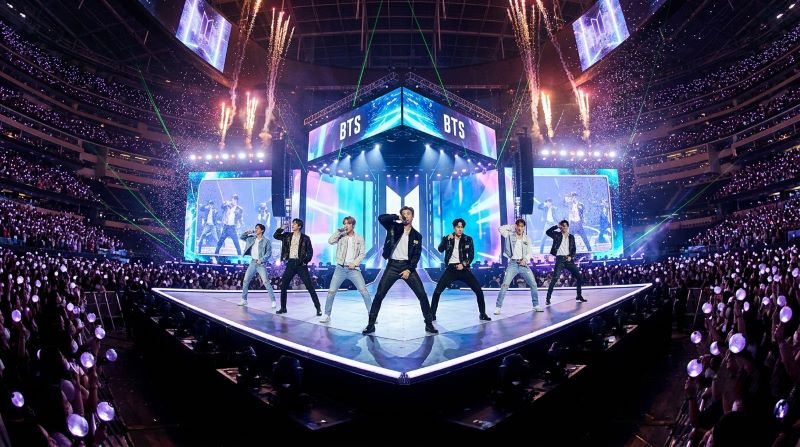
In June 2022, a monumental shift rippled through the global music industry when BTS announced an intention to pivot toward individual growth and internal reflection. For a group that had spent nearly a decade shattering Billboard records, dominating the IFPI Global Recording Artist charts, and selling out stadiums in mere minutes, this pause was not just a career milestone; it was a societal event. While the group’s label emphasized that this was a restructuring rather than a dissolution, the announcement catalyzed a profound conversation about the nature of modern fandom, the quantification of digital presence, and the increasing anxiety of living in a hyper-connected, real-time culture.
To understand the gravity of this hiatus, one must look at the data-driven landscape of K-pop. The industry is currently defined by an unprecedented frequency of output. Between 2013 and 2022, BTS maintained an aggressive release cycle, consistently charting multiple albums simultaneously and feeding a digital ecosystem that demands continuous engagement. When the clock stops on a group of this magnitude, the vacuum is not just emotional; it is statistical. In an age where success is measured by the velocity of a hashtag, the consistency of stream counts, and the daily refresh rate of social media feeds, any deviation from the status quo is perceived as a disruption of a well-oiled machine.
The Quantification of Connection and the Myth of Perpetual Availability
The modern relationship between a fan and a K-pop idol is paradoxically built on the illusion of intimacy. Fans can access a member’s morning musings, evening photos, and live-streamed snippets of their personal lives. This technological accessibility creates a psychological proximity that defies physical borders. However, this ease of connection introduces a difficult paradox: the more accustomed we become to constant access, the harder it is to endure silence. When a performer is present every day, their absence ceases to be a natural state of rest and transforms into an event that demands a structural explanation.
We must analyze this through the lens of ‘platform time.’ In the digital era, an artist’s existence is bifurcated between the world of their creative output—the music and performance, which operate on a longer, more deliberate timeline—and the world of the digital platform, which operates on the relentless rhythm of the refresh button. In this latter space, the most recent post holds the most authority, and the frequency of updates is often conflated with relevance. When this digital clock dictates the pace of an artist’s career, the human need for reflection becomes a liability. The pressure to remain visible is not just a personal challenge for the artist but a demand imposed by the algorithmic nature of fame, where ‘inactive’ is often synonymous with ‘forgotten’ in the eyes of metrics-hungry engagement trackers.
Industry Trends and the Paradox of Production
The history of popular music has always involved a tension between activity and rest, but the current K-pop model has fundamentally altered this cadence. Historically, the gap between albums was accepted as a necessary period for production, rehearsal, and creative development. Today, the lines are blurred. Even when a group is not actively releasing music, they are expected to maintain a ‘digital presence’ through short-form content, live broadcasts, and behind-the-scenes vlogs. The sheer volume of content produced by a group like BTS—often reaching hundreds of millions of views annually—means that a hiatus is not merely a break from performing; it is a withdrawal from a constant, high-frequency supply chain that fans have been conditioned to consume.
This suggests a structural shift in how we value cultural products. We are increasingly viewing pop stars through the lens of ‘total access,’ where their labor is not just the music they create, but the continuous narrative they maintain across digital platforms. When the numbers show that an artist’s engagement metrics drop during a break, it is often misinterpreted by the industry as a failure of market reach. However, this ignores the longevity of the art itself. A song does not stop being impactful simply because it is no longer being promoted, yet the digital ecosystem forces us to prioritize the ‘now’ over the ‘always,’ creating a cycle of anxiety for both the creator and the consumer who feels a loss of that parasocial thread.
Reimagining the Fandom as a Cultural Community
The reaction to BTS’s hiatus serves as a mirror for how modern fandom operates as a social collective. Fans are not merely passive consumers; they are organized, active participants in the artist’s success, often coordinating to boost chart positions or organize global initiatives. When an artist takes a break, the community feels the pause of that collective momentum. Because the artist’s journey is so deeply intertwined with the fans’ own life milestones, the hiatus is not just an interruption of a product cycle; it is a forced deceleration of a shared history. Acknowleging this helps us distinguish between ‘demanding labor from an idol’ and ‘feeling a genuine sense of displacement’ when a major source of comfort disappears.
Ultimately, the discourse surrounding the group’s transition into individual activity—and eventually into military service and back—underscores the need for a healthier relationship between the industry’s demand for data and the artist’s human need for time. The struggle to reconcile these two opposing forces is the defining challenge of the current generation of K-pop. Moving forward, the industry must recognize that true sustainable connection is not built on the frequency of content, but on the depth of the legacy. As the landscape continues to evolve, the ability to grant artists the agency to step back without triggering a perception of crisis will be a vital indicator of an industry that prioritizes long-term artistic health over the fleeting, high-frequency dopamine hit of the next viral post.