As South Korea reevaluates its long-standing military service exemption system, the cultural impact of BTS completing their service has become the primary benchmark for national fairness.
A critical debate has surfaced within the South Korean National Assembly regarding the ‘Arts and Sports Personnel’ military service exemption system. During a recent audit, Representative Kim Byung-joo of the Democratic Party of Korea highlighted a significant imbalance in how exemptions are granted, particularly concerning professional team sports like soccer and baseball. Data provided by the Military Manpower Administration revealed that between 2018 and 2023, nearly 70% of athletes granted exemptions via Asian Games success came from just these two sports. The core of the controversy lies in the structural disparity between individual athletes, who must secure a gold medal to qualify, and team sports, where a single collective victory can grant exemptions to up to 20 individuals simultaneously.
The BTS Precedent and the Shifting Social Contract
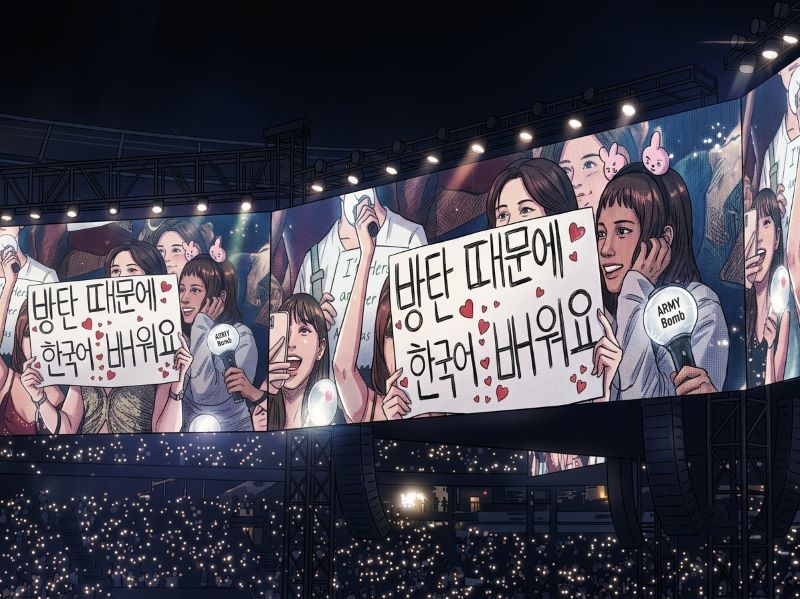
The conversation surrounding these exemptions has reached a fever pitch due to the ‘BTS factor.’ When the members of BTS, arguably the most culturally influential figures in South Korean history, fulfilled their military duties, the nation witnessed a seismic shift in expectations. For years, the public wondered if the global superstars would receive special treatment given their immense contribution to the ‘Hallyu’ wave. Their decision to serve not only cemented their status as icons of humility but effectively erased the argument that ‘national prestige’—whether through K-pop or sports—automatically warrants a bypass of mandatory service. Representative Kim’s remarks explicitly invoked this moment: if the world’s biggest act could serve, why should professional athletes, who are already compensated through lucrative league contracts, benefit from a loophole that seems increasingly archaic?
Comparative Analysis: The Evolution of National Service
To understand the current tension, one must compare this moment to the historical context of the exemption system, which was established 53 years ago. Originally designed to bolster national morale and elevate the country’s status on the world stage during its developmental years, the policy has struggled to adapt to the modern era. We see a mirror of this tension in the past: in 2002, the South Korean national soccer team was famously granted exemptions following their historic World Cup performance. At the time, the public sentiment was overwhelmingly supportive, viewing the accomplishment as a singular, unifying national triumph. However, the contrast today is stark. The 2002 scenario was viewed through the lens of a developing nation proving itself to the world; today, South Korea is a global cultural and economic powerhouse where the perception of ‘fairness’ has superseded the desire for government-sanctioned athletic privileges.
Furthermore, the current discourse signals a broader trend in K-pop industry politics. For years, there was a quiet, persistent lobbying effort to include K-pop stars under the same ‘Arts and Sports’ banner as classical musicians and ballet dancers. By choosing to enlist rather than wait for a legislative change that might have favored them, BTS essentially neutralized the ‘exceptionalism’ defense. This shift highlights a departure from the ‘cultural diplomacy’ era, where the government treated entertainment and sport as tools of soft power, toward a ‘meritocratic’ era where the average citizen’s perspective on duty carries more weight than institutional legacy.
The Structural Imbalance: Soccer, Baseball, and the ‘Gold Medal’ Loophole
The source data reveals that the system is not only perceived as unfair but is structurally flawed. While the government has historically defended the retention of these exemptions under the guise of protecting ‘minority or unpopular sports,’ the statistics prove otherwise. The concentration of exemptions in soccer and baseball—the most commercially viable sports—contradicts the stated mission of the program. If the goal was to keep niche sports alive, the data shows that those sports are being left behind by the sheer volume of exemptions flowing to professional leagues. This creates a perception that the system rewards popular athletes who are already well-positioned for career longevity, while leaving the ‘national prestige’ argument hollow for everyone else.
Community sentiment in South Korea, and among the broader global K-pop fandom, generally reflects this demand for transparency. When topics of military service arise, the consensus within the fan community has moved toward a protective stance—a desire for their favorites to be treated exactly like any other young man in the country to avoid unnecessary scandal. The frustration voiced by legislators now aligns with the public’s desire to see the ‘fairness’ of the law applied universally. The days of accepting exemptions as a reward for national pride are fading; in their place is a new, rigorous demand for equity that spans from the Olympic podium to the world’s largest concert stages.
Looking Ahead: What Comes Next?
The pressure to reorganize, or even entirely abolish, the Asian Games-related military exemptions is now at its peak. The call for a total reform is not merely about closing a loophole; it is about aligning the country’s legal structures with contemporary values. Moving forward, the government faces a binary choice: either enforce stricter, more equitable criteria that eliminate the ‘team sport’ advantage, or face the eventual phasing out of the system altogether. For the K-pop industry, this development suggests that future debates on enlistment will be handled with far less ambiguity. The path blazed by BTS—one of quiet compliance rather than political maneuvering—has likely become the blueprint for all future acts. As the National Assembly proceeds with its audit and potential policy revisions, the legacy of this ‘service debate’ will likely be the permanent end of the ‘exception’ era, reinforcing the idea that in the eyes of the public, the greatest level of honor is found in shared, mandatory participation.