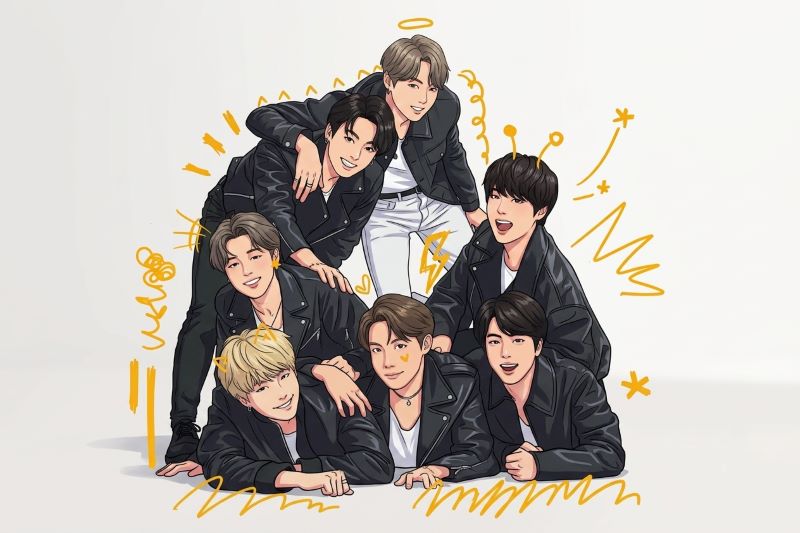
As the global music industry watches the Recording Academy grapple with its relevance, the growing trend of K-pop giants opting out of submissions marks a pivotal shift in the power dynamic between international artists and Western institutions.
In a move that reverberates far beyond the walls of the Recording Academy, recent reports indicate that major K-pop acts, including BTS members and Stray Kids, have opted not to submit their works for Grammy consideration this cycle. This decision is not merely a bureaucratic footnote but a profound signal of a shifting landscape where the world’s most successful artists are redefining the value proposition of traditional industry accolades. By choosing to bypass a ceremony once considered the pinnacle of musical achievement, these artists are effectively challenging the Grammys to justify their own cultural currency in an era where global streaming numbers and digital fandom loyalty carry more weight than institutional validation.
A Trajectory Defined by Hard-Won Recognition
To understand the gravity of this decision, one must view it through the lens of the long-standing, often fraught relationship between K-pop and the Western establishment. For years, the career trajectories of groups like BTS and Stray Kids have been marked by a relentless pursuit of breaking barriers. For BTS, the journey began with building a grassroots movement that eventually forced the industry to acknowledge their cultural impact, leading to historic Grammy nominations and performances. This was a hard-fought battle to prove that ‘global pop’ was not just a niche genre but the heartbeat of the modern music industry. Stray Kids, conversely, have built their empire on self-production and a ferocious, high-energy sonic identity that has consistently topped the Billboard 200, proving that internal creative control is a viable path to international dominance.
The path taken by these artists has transitioned from seeking entry into established systems to creating their own ecosystem of success. Initially, the goal was validation—to be included, recognized, and given a seat at the table. However, after years of navigating what many fans perceive as an inconsistent criteria and opaque selection process, the focus has shifted. The current trend suggests that for these artists, the ‘Grammy effect’ has become redundant. When your stadium tours sell out in minutes and your digital engagement dwarfs that of the traditional music establishment, the need for a legacy award diminishes, replaced by a preference for direct, unmediated connection with a global audience that already considers them the best in the world.
Analyzing the ‘Opt-Out’ Strategy as a Cultural Statement
This development mirrors a broader pattern seen in other sectors of the entertainment industry where creators are increasingly frustrated by legacy institutions that fail to reflect the diversity and evolution of the digital age. By refusing to submit, these artists are asserting a new level of agency. This is not the tantrum of an overlooked act; it is the calculated indifference of power brokers who recognize that their brand value is now higher than the trophy they are being asked to chase. Historically, K-pop artists have been expected to perform subservience to Western industry standards to gain ‘legitimacy.’ This new stance signals that the age of performing for the approval of a select committee is effectively over, marking a transition toward an industry model where the artist’s own metrics are the only ones that matter.
Furthermore, this move exposes the ‘half-festival’ predicament of the Grammys. If the awards continue to exclude the most significant cultural movers of the decade, they risk becoming an insular, self-congratulatory circle that loses its relevance to the average music listener. The silence from the K-pop giants acts as a mirror, forcing the industry to confront whether they are truly reflective of global music trends or merely protective of a Western-centric status quo. This mirrors the trajectory of the Oscars or the Golden Globes during their respective reckonings, where the lack of representation eventually led to a crisis of legitimacy. By opting out, these K-pop superstars are not just making a career decision; they are drawing a line in the sand, daring the establishment to catch up before they move on entirely.
Fandom Unity and the New Industry Paradigm
For the fandoms behind these groups—the ARMY, STAY, and beyond—this news is typically met with a mixture of vindication and support. There is a deeply ingrained sentiment within these communities that their artists are being held to a ‘double standard’ by international award bodies. Whenever news surfaces regarding snubbing or limited consideration, the consensus among fans is rarely one of disappointment in the artists, but rather, a celebration of the group’s independence. In the eyes of the supporters, the artists have outgrown the necessity for external validation. This communal sentiment serves to strengthen the bond between the star and the fan; when the artist rejects a system that the fans feel has historically mistreated their idols, it reinforces a sense of shared purpose and identity that no trophy could ever replicate.
This collective attitude is a force multiplier in the digital age. Fans are increasingly aware of the mechanics behind the curtain, and their influence in steering trends, streaming records, and social media discourse is tangible. When the community collectively agrees that a specific award show is ‘not worth it,’ the loss of engagement for that show is instantaneous and measurable. This shifts the power from the academy to the audience, creating a feedback loop where the artist’s career success becomes synonymous with the fan’s active role in building that success. It is a democratization of prestige that the industry is still struggling to reconcile.
Looking Ahead: What This Sets Up Next
Looking at the horizon, this move sets the stage for a fragmented but more localized model of success. We are likely to see more artists prioritizing regional awards, specialized digital recognition, and direct-to-fan platforms over seeking universal accolades. This doesn’t mean the end of K-pop’s presence on the global stage, but rather a more selective engagement. These artists will likely continue to dominate global charts and stadiums, but they will be doing so on their own terms, focusing on creative autonomy rather than institutional compliance. The next chapter of K-pop’s career trajectory will likely be defined by this newfound ‘arrogance’—not in the negative sense, but in the sense of absolute self-assuredness that they no longer need permission to exist at the highest level of global culture.
Ultimately, the Grammys will have to decide whether they wish to remain a domestic trade association or attempt to truly represent the global music landscape. If they choose the former, they risk irrelevance among the younger demographics that now fuel the global music economy. If they choose the latter, they have a massive bridge-building project ahead of them. Until then, we are witnessing the maturation of K-pop as an industry player that has moved past the need for approval. The silent protest is arguably louder than any acceptance speech could ever be, signaling that the future of music belongs not to the gatekeepers, but to those who hold the keys to the world’s attention.