As the 2026 Aichi-Nagoya Asian Games spotlight athletes securing historic victories, the recurring debate over military service exemptions reignites, forcing a cultural reckoning between national duty and global prestige.
The recent triumphs at the 2026 Aichi-Nagoya Asian Games—ranging from the precision of the shooting team to the historic gold in canoe sprint and the masterful gymnastics performance of Yeo Seo-jeong—have once again brought Korea’s military service exemption policies into the center of public discourse. While these athletes are celebrated for bringing glory to their nation, their achievement naturally invites comparisons to other sectors of South Korean excellence, most notably the cultural sphere. This ongoing tension highlights a fundamental question regarding how a modern nation measures its identity: does a gold medal in sport carry a different weight than the soft power generated by global superstars like BTS?
The Evolving Context of National Service
To understand the current fervor surrounding these Asian Games victories, one must place them within the broader career trajectories of Korea’s most prominent figures. For decades, the military exemption policy—a system designed to reward those who elevate Korea’s national prestige—has been applied primarily to classical musicians and elite athletes. However, the global rise of K-pop in the 2010s and 2020s fundamentally challenged this framework. When BTS, a group that arguably did more for Korea’s international image than any diplomatic mission in recent history, faced the reality of mandatory conscription, the inconsistency of the law became impossible to ignore. The current discourse is not necessarily a slight against the athletes winning in Nagoya; rather, it is a reflection of a society struggling to reconcile 20th-century definitions of ‘national merit’ with 21st-century realities.
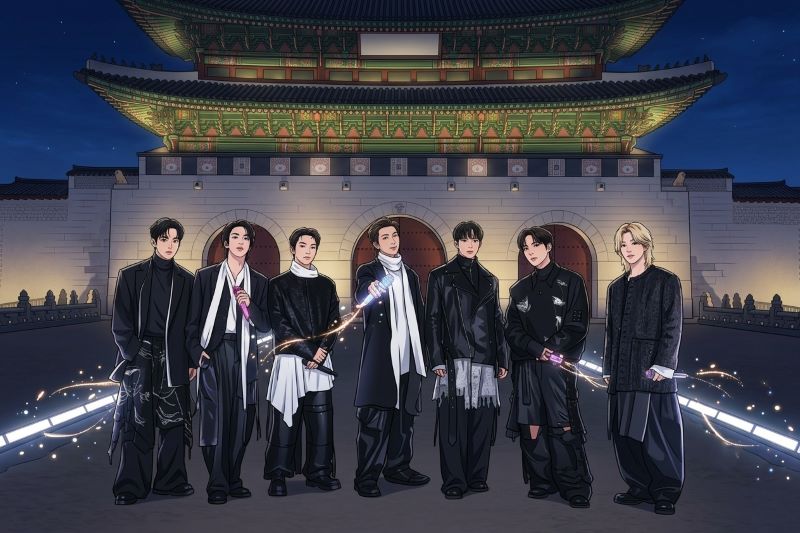
Looking at the career timeline of the BTS members, their path from trainees to global icons was marked by a steady accumulation of milestones: their first Daesang, their chart-topping success on the Billboard Hot 100, and eventually, their impact on the global cultural economy. For fans, seeing these artists pause their careers to fulfill their duties was a moment of profound maturity and cultural significance. However, it also served as a benchmark against which all other ‘contributions to national prestige’ are now measured. The fact that the Asian Games continue to spark debate suggests that the public sentiment is no longer satisfied with the status quo, as they weigh the physical exertion of a canoe sprint against the years-long slog of an idol trainee and the global reach of a record-breaking tour.
Defining Prestige in the Global Age
The core of this debate lies in the subjective valuation of what constitutes a service to the nation. Traditionally, military exemption was seen as a way to allow high-achieving individuals to continue peak performance in their fields without the disruption of conscription. This makes sense for a gymnast like Yeo Seo-jeong, who is following in her father’s footsteps to build a career defined by finite biological peaks. The physical nature of sport creates a ‘use it or lose it’ reality. Yet, the K-pop industry operates on a different, albeit equally intense, timeline. When an artist is forced to interrupt a world tour or a massive comeback cycle, the ‘loss’ to the national economy and cultural reach is arguably massive, yet it remains unquantified under current laws.
This pattern mirrors the broader K-pop experience of ‘career-interruption anxiety.’ Fans are acutely aware that a group’s peak, though often longer than a sprinter’s, is equally volatile. By observing how the industry reacted to the hiatus of groups like BTS, it is clear that the lack of clear, modern criteria for exemption creates unnecessary friction between fandoms and the state. The debate is rarely about whether an artist should avoid service—most fans agree that duty is a part of the Korean experience—but rather about the fundamental fairness of the current selection process. When an athlete receives an exemption for a gold medal, it validates their sacrifice for the nation’s pride. Fans are simply asking for a system that recognizes the sacrifice made by artists who serve as the face of that same nation abroad.
The Road Ahead: A Call for Consistency
As we move past the excitement of the 2026 Asian Games, the path forward appears fraught with legislative inertia. The government has attempted various ‘secret weapons’ to promote national interest, but these often feel like band-aid solutions for a deeper structural issue. The issue of military service is deeply tied to the Korean social contract, and any change is met with intense scrutiny. However, the continued success of South Korean cultural exports ensures that this topic will not disappear. We are likely to see more ‘cultural diplomacy’ initiatives that attempt to bridge the gap, but until the legal framework is modernized to account for the unique labor and prestige-building of the entertainment industry, the public will continue to view these discrepancies as an ‘old’ system struggling to contain a ‘new’ reality.
Ultimately, the juxtaposition of an athlete’s victory and an artist’s enlistment is not a zero-sum game, though it often feels like one to the public. The real lesson from this current cycle of debate is that the definition of a ‘national hero’ has become increasingly fluid. The pride felt in seeing a Korean athlete win in Japan is indistinguishable from the pride felt seeing a Korean group fill a stadium in London. As the nation looks toward the next generation of talent, the pressure to reform these outdated systems will only mount. We are witnessing the maturation of a society that is beginning to demand that its regulations match its status as a global leader in both sport and culture. The next few years will be crucial in seeing if the government finally aligns these two worlds under a single, transparent standard of recognition.