Blackpink’s Rosé recently offered fans a glimpse into her world, posting a series of elegant photographs on social media that showcased the singer in a sophisticated all-black dress. Set against the muted, intimate backdrop of a hotel room, the imagery serves as a quiet departure from the high-octane visual spectacles often associated with K-pop idol content. While the visual aesthetic is undeniably chic, the timing of this quiet moment feels deliberate, occurring as she navigates the successful release of her latest solo single, ‘new trick’. It is a moment of refined stillness that contrasts sharply with the frantic energy of a promotional cycle, highlighting the artist’s ability to maintain her gravity amidst a rapidly shifting career trajectory.
The Evolution of a Solo Identity
To understand the significance of this current phase, one must look back at the origins of Rosé’s solo journey. When she debuted as a soloist in 2021 with ‘R’ and the chart-topping ‘On The Ground’, the industry was watching closely. She was tasked with the immense pressure of carving out a distinct musical identity while remaining the lead vocalist of the world’s biggest girl group. At that time, her image was heavily tied to the ethereal, high-fashion branding of Saint Laurent and the polished, cinematic aesthetic typical of YG Entertainment’s top-tier stars. ‘On The Ground’ felt like a declaration of independence, a soaring pop anthem that sought to establish her as a standalone global force, yet it still clung to the familiar sonic textures that defined the Blackpink soundscape.
Fast forward to the present, and the contrast is palpable. With the release of ‘new trick’ in September 2026, Rosé is leaning into a more experimental, textured sound—incorporating garage punk, pop-rock, and alternative elements. Working alongside heavy-hitting producers like Amy Allen and Andrew Wells, the music reflects a maturation in her creative direction. This is not just a stylistic choice but a shift in industrial philosophy. Where ‘On The Ground’ was a traditional K-pop solo launch designed to hit specific Billboard benchmarks, ‘new trick’ feels like a curated artistic statement. The fact that the music video was shot entirely on an iPhone 18 Pro by renowned director Dave Meyers indicates a pivot toward raw, hyper-modern accessibility. This is a deliberate move away from the ‘K-pop idol’ polished veneer toward an ‘independent artist’ aesthetic, mirroring the path taken by international pop stars who prioritize creative authenticity over traditional production values.
Comparative Analysis: The ‘On The Ground’ Paradigm vs. The ‘New Trick’ Shift
When comparing this moment to her 2021 debut, the evolution is stark. In 2021, the success of ‘On The Ground’ was defined by massive streaming numbers and record-breaking YouTube views within the first 24 hours. The goal was to prove that a member of a global group could hold her own as a solo entity, and she succeeded in doing so by securing the highest-ever ranking for a female K-pop soloist on the Billboard Hot 100 at that time. It was a victory of scale. However, ‘new trick’ feels less focused on breaking speed records and more focused on longevity and sonic identity. It signals a shift from ‘participation’—where artists compete for charts—to ‘curation’, where the artist defines the genre boundaries they wish to inhabit.
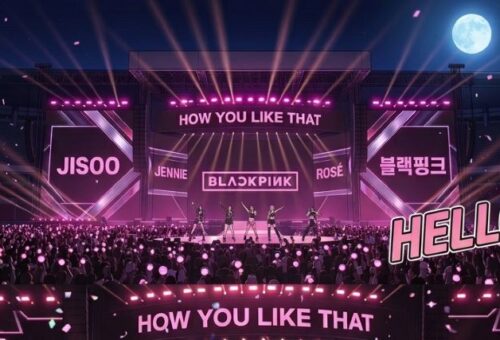
This shift echoes a broader trend we have seen in recent years, where veteran idols seek to shed the constraints of their initial branding to explore grit and vulnerability. We saw a similar pivot with members of BTS as they moved toward solo projects, choosing introspection over the high-energy group persona. Yet, Rosé’s approach remains uniquely her own because of how she integrates this with her high-fashion presence. She is not merely changing her music; she is recalibrating the intersection between her visual brand and her sonic output. The ‘all-black’ hotel photos, characterized by their moody lighting and casual composition, perfectly illustrate this transition: she is no longer the idol performing under the blinding lights of a stadium, but a seasoned professional comfortable in the quiet, creative spaces where the real work happens.
Community Sentiment and the Future of the Soloist
The reception within the global fandom has been one of quiet observation and deep appreciation for this maturity. K-pop fandoms are notoriously data-driven, often quantifying success through streaming spikes and hashtag trends. However, there is a discernable maturity in how fans are engaging with this current cycle. There is less pressure to ‘prove’ her relevance—because her accolades, such as her Grammy recognition and her historic Spotify milestones with ‘APT.’, have already cemented her place in the upper echelon of global pop—and more room for intellectual discussion about her artistry. The community recognizes that the ‘new trick’ era represents a professional coming-of-age.
This sentiment suggests that fans are ready for artists to move away from the ‘always-on’ cycle of constant content toward a more meaningful, sporadic release schedule. The global fandom, having matured alongside these artists, is increasingly valuing artistic credibility over volume. By shifting to a ‘new trick’ approach, Rosé is not only signaling a move toward more indie-influenced production but also inviting her audience to grow with her. She is trading the immediate gratification of a viral hit for the long-term respect of critics and peers alike. This change in industry direction is crucial, as it provides a roadmap for other K-pop artists who have survived the initial ‘idol’ period and are looking to define their legacy.
Looking ahead, the road for Rosé seems clearly paved toward further international expansion as a songwriter and performer. With her established track record of shattering global records—being the first K-pop artist to hit number one on Apple Music’s Global Top 100, and her historic Grammy nods—she is no longer trying to climb the ladder; she is changing the rungs. We can likely expect more experimental collaborations and perhaps a shift in her live performance style, focusing on smaller, more intimate venues that complement the alternative leanings of her latest work. Ultimately, this moment of quiet, stylish reflection on social media is just the calm before the next stage of her evolution, proving that in a world of loud performances, sometimes the most powerful move is to change the tempo entirely.